
Cache County Release Date Types
Three date systems can apply to a Cache County inmate. A pretrial detainee may have no fixed release date because departure depends on a judge’s order, bail and conditions, the case outcome, and any other hold. A court order or bail payment can authorize release before jail staff finish processing. Cache County Jail remains the source for the actual physical exit.
A county jail sentence begins with the commitment or judgment. Jail staff calculate the custodial term under that order and any credit that applies. A state-prison sentence works differently. Utah uses indeterminate sentencing, which means the court sets a statutory range and the Utah Board of Pardons and Parole decides the actual term within it. The Board may schedule a hearing before it sets any release date.
Scheduled versus actual: A court or Board date authorizes a custody event; the actual release record confirms when and where the person departed.
| Custody status | Best date source | Main limit |
|---|---|---|
| Pretrial at Cache County Jail | Court order plus Jail confirmation | No fixed date may exist |
| Cache County jail sentence | Judgment plus Jail Records computation | Local credit is discretionary under state law |
| Utah state-prison sentence | Board order plus UDC Release Date/Type | A hearing month is not a release date |
| Parole in the community | UDC Location and Board order | Parole release is not full discharge |
Find Cache County Release Dates
Begin with legal custody. The Cache County public list can omit Utah State and federal prisoners housed at the jail, so absence from that roster is weak evidence. During the documented online outage, the Sheriff directs booking and inmate questions to 435-755-1227. Ask whether the person is physically held, whether a release order has arrived, and whether another agency has placed a hold. If the person left, ask for the departure date, disposition, and destination.
For state custody, use the UDC Offender Search. Search by offender number when possible. Otherwise, enter first and last name, match date of birth, and open View. Read the exact labels Location, Housing Facility, and Release Date/Type. The field is not called “Projected Release Date” or “Tentative Release Date.” It may show a date with a type such as parole date, or it may show N/A.
- Decide whether the person is pretrial, serving a Cache County jail term, or serving a Utah prison sentence.
- For county custody, review the court order and call Cache County Jail for physical status and other holds.
- For state custody, match the person in UDC and read Location, Housing Facility, and Release Date/Type.
- Search the Board’s published order when parole or a state-prison date is involved.
- Near the date, confirm with Jail staff or UDC because authorization and processing are not the same event.
- After departure, request the actual release, termination, or expiration record when durable proof is needed.
The official UDC interface shows the fields used for a Cache County state case:
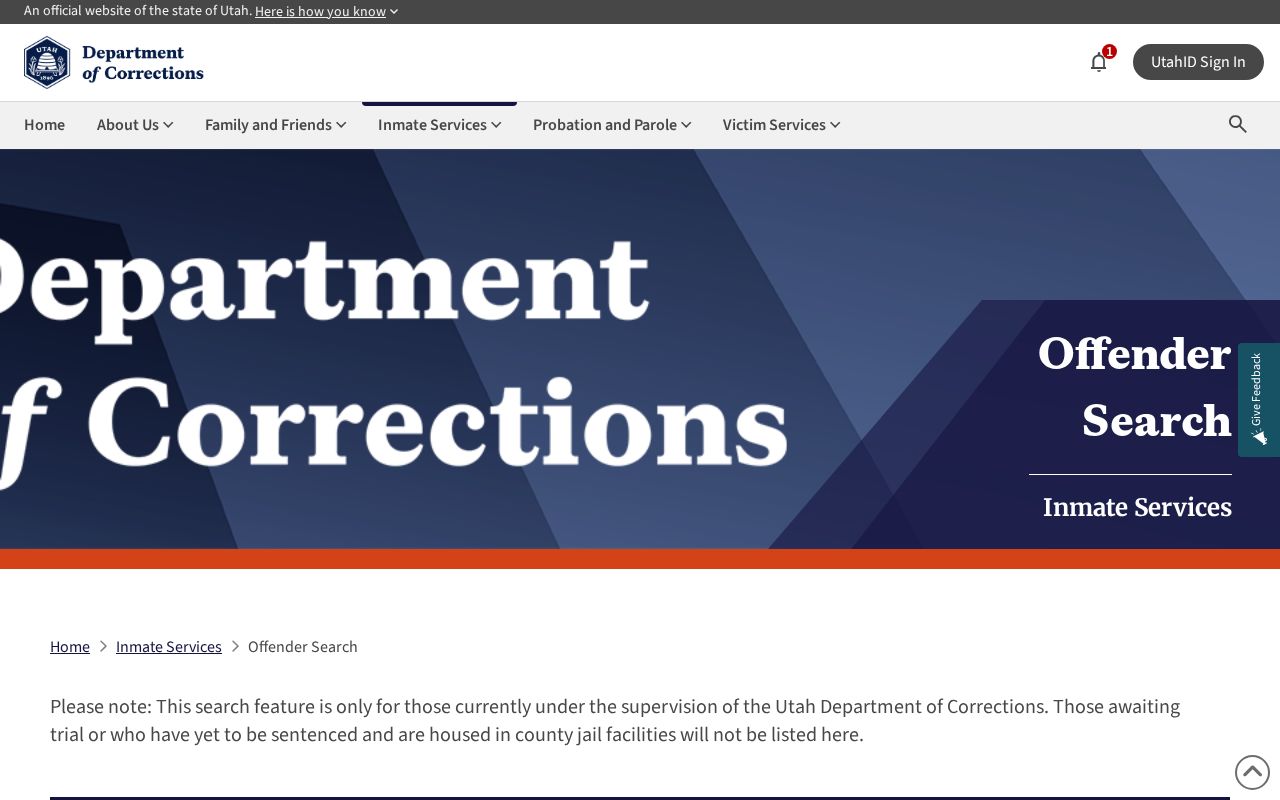
Because UDC lists only people currently under its supervision, a fully discharged person may disappear. The Cache County released inmate record path explains the jail, court, UDC, federal, and immigration routes for an older departure.
Note: An N/A release field can mean no Board date has been entered; it does not establish permanent confinement.
Cache County Jail Date Credits
Utah Code §76-3-403 permits a county custodial authority, in its discretion and for good behavior, to allow up to ten days of credit for each thirty days served. For a term shorter than thirty days, it permits up to two days for each ten days. The provision applies to misdemeanor incarceration and to incarceration imposed as part of a qualifying felony probation agreement unless the sentencing judge orders otherwise.
“Permits” is important. The statute does not make the maximum credit automatic. No current Cache County handbook or Sheriff policy was found that states how the jail uses this discretion, handles partial units, or treats a possible weekend date. That research gap rules out a reliable web calculator. Jail Records must apply the judgment, actual time in custody, court-ordered credit, local good-behavior decision, and any hold.
A focused records question should ask for the sentence-computation sheet or maintained equivalent, the commitment date, jail credit, good-behavior credit applied, any forfeiture, and the current scheduled end date. Include the booking number and court case when known. The Sheriff’s published jail-record request form confirms a Jail Records category, but it does not promise that each requested field is public or maintained in one document.
Utah Prison Release Date Rules
Utah has no general rule requiring every state prisoner to serve about eighty-five percent of a fixed term. Applying that formula to a Cache County state case would conflict with Utah’s indeterminate system. The court sets the legal range. The Board makes the release decision, subject to statutory minimum limits, and UDC carries out the order.
Utah Code §77-27-5.4 creates an earned-time program tied to successful completion of approved recidivism-reduction programs in the person’s case action plan. It provides at least four months for each of up to two approved programs, an ordinary mandatory maximum of eight months, and allows more discretionary Board credit. Earned time works against a release date the Board has already ordered. It is not day-for-day jail good time and does not produce a universal public forecast.
The statute excludes several situations, including life without parole, an order to expiration including life, no current release date, an unmet Board contingency, too little transition time before an existing date, and an existing termination date. The Board can forfeit credit when a rescission hearing becomes necessary. Under §77-27-9, the Board also faces minimum-term restrictions. A guideline or tentative hearing month creates no guaranteed date.
Note: Utah earned time under §77-27-5.4 reduces an ordered date only when the person and program meet the statute.
Why Cache County Dates Change
A date can move before or after it first appears. The cause may be a new legal order, a correction to sentence data, a Board action, earned-time treatment, or a hold by another custodian. These are not interchangeable. A detainer is a request or notice that another agency wants custody. It can stop community departure even when the Cache County or UDC term otherwise reaches its release point.
| Factor | How the date can change | Source to verify |
|---|---|---|
| Board decision | Sets, changes, or withdraws a parole date | Published Board order |
| Program earned time | Reduces an already ordered Utah date when statutory terms are met | Board and UDC records |
| Rescission or forfeiture | Can remove a future date or earned-time credit | Board decision |
| Court correction | Changes sentence, commitment, or credit information | Court docket and amended order |
| Other sentence or hold | Prevents community release or sends the person to another custodian | Jail, UDC, court, and receiving agency |
| Release processing | Makes actual departure later than calendar authorization | Originating facility release record |
Paying Cache County bail also does not prove physical release. Staff may still need to process judicial conditions, and another hold may remain. For the same reason, a person who drops off the jail roster may have transferred to UDC, another county, federal custody, or ICE rather than entered the community.
Note: Follow a transfer in the receiving system; the releasing system’s departure date does not prove community arrival.
Cache County Parole Date Checks
The Utah Board hearing and decision search is essential for a Cache County state-prison release date. Search by name or UDC number, or use a date range for scheduled hearings and published decisions. A tentative hearing month is only an estimate. The actual event may be set weeks beforehand and may occur later than the first estimate.
An original hearing can lead to a rehearing, a future parole date with conditions, paper review, or continued incarceration. A hearing-day result is not release. The Board often publishes a decision later, and the signed order controls. Even a future parole date can be rescinded based on behavior, a new conviction, or another issue. Read the order, then compare UDC’s Release Date/Type and Location fields. A Location of PAROLE after the date is stronger evidence of release into community supervision than the hearing calendar alone.
Parole is not discharge. The person remains under AP&P supervision until termination or expiration. If the question concerns when supervision ends, request the final Board or UDC record rather than reusing the prison-release date.
Cache County Release Day Timing
UDC publishes a specific process for Utah state-prison releases and paroles. Those releases are processed on Tuesdays, mostly at the Utah State Correctional Facility release building. Pickup parties arrive at 9 a.m. for people housed at USCF or the Central Utah Correctional Facility and at 10 a.m. for state prisoners housed in a county jail. Processing may take one to four hours.
Almost every UDC prisoner held in a county contract bed is transported to USCF for release. A rare direct county-jail release is communicated separately. UDC transports a person going to a community correctional center. Someone without a ride may be taken to a nearby UTA TRAX station and released last. These rules apply to a state prisoner, including one held under UDC authority in Cache County. They do not govern an ordinary Cache County bond, dismissal, or county-sentence exit.
The official UDC Release Day instructions show that state process:
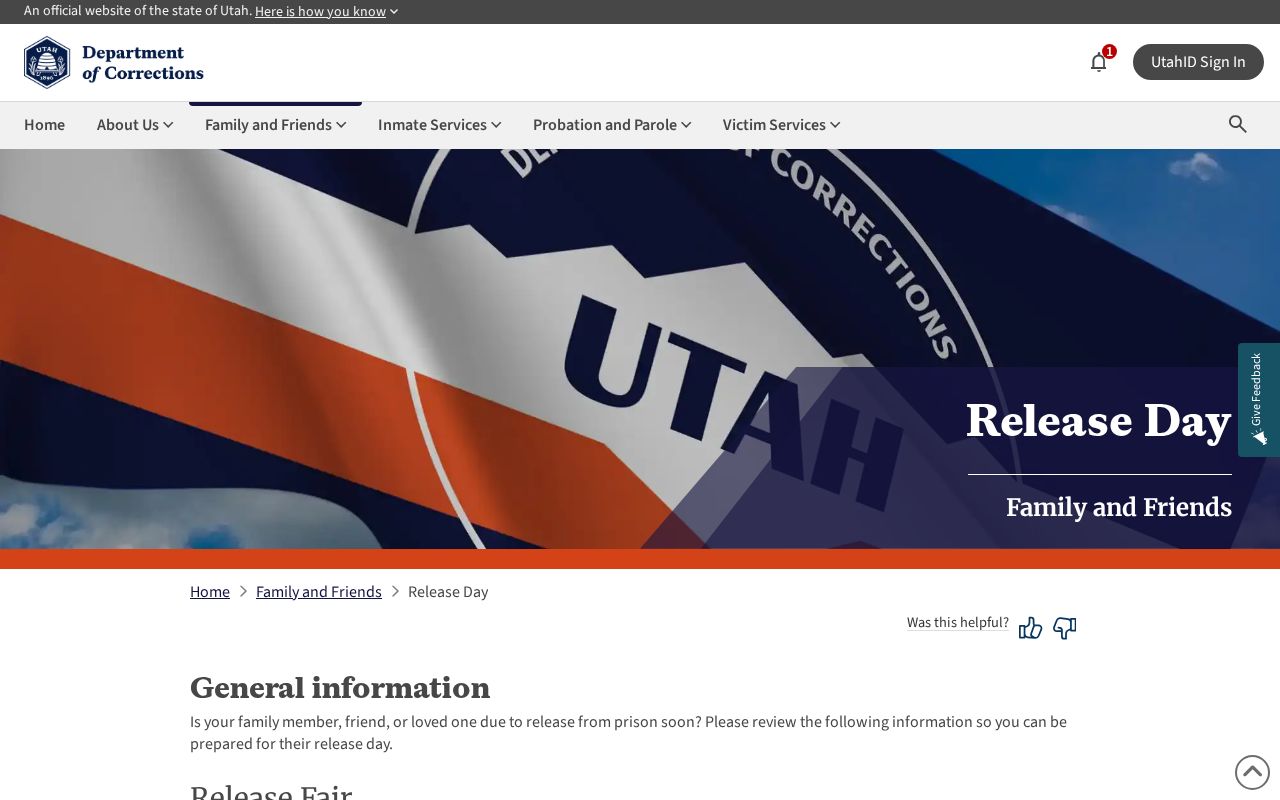
Cache County does not publish ordinary jail release hours, an exit door, a family waiting area, or a weekend-release rule. Call 435-755-1227 for local timing instead of applying the UDC Tuesday schedule.
Confirm Cache County Release Dates
Use a hierarchy when a date is close. For a state case, read the newest Board order, then the current UDC Release Date/Type field, then Location and Housing Facility. Confirm with UDC or Logan AP&P near the date. For a county case, read the latest court order and ask Cache County Jail whether release has been fully processed and whether another hold changes the destination.
Utah UDC VINE can add a custody-change or release alert, but it is not a certified record. Cache County’s independent jail participation was not confirmed on an accessible official list. The VINELink Release Check explains how to search the live Utah system and register for a matched person. Confirm an alert with the jail, UDC, or Board because transfer and release are different events.
Afterward, obtain the actual release, termination, or expiration record when the date must be preserved. A narrow Cache jail request can seek the departure date and time, release disposition, destination or receiving agency, court case, holds, and booking number if those fields are maintained and releasable. A UDC GRAMA request can seek final legal status, the actual parole or release date, and the related Board order. Exact agency records resolve what a forward-looking date cannot.
Note: Court entries explain legal authority, but the originating jail or UDC record confirms physical release.