
Cache County Parole and Probation
Parole and probation are two different forms of community supervision. A Utah judge imposes probation. It may let a person remain in the community instead of serving a jail or prison term, or it may follow a short period in custody. The Utah Board of Pardons and Parole orders parole after a state-prison sentence. Utah Department of Corrections Adult Probation and Parole, known as AP&P, supervises both groups in the community. AP&P enforces the terms, but it does not decide who receives parole or probation.
The distinction controls the record trail. A parole question starts with the Board order and the UDC offender detail. A probation question starts with the sentencing court order and may also appear in UDC when AP&P is the supervising agency. Neither status can be inferred from a person leaving Cache County Jail. A local detainee may leave on bond, after dismissal, or after time served without ever entering parole or probation.
| Point | Parole | Probation |
|---|---|---|
| Who orders it | Utah Board of Pardons and Parole | Sentencing court |
| Custody link | Conditional release from state prison | May replace or follow jail or prison time |
| Primary proof | Board order plus UDC status | Court order plus UDC status when AP&P supervises |
| Community agency | UDC Adult Probation and Parole | UDC Adult Probation and Parole when assigned |
| End of status | Board termination or expiration | Court discharge or expiration under the order |
- Parole
- Conditional community release from a Utah prison sentence under a Board order.
- Probation
- Court-ordered community supervision that may be used instead of, or after, custody.
- Discharge
- The formal end of a sentence or supervision term, not merely a move out of jail.
- Absconder
- A supervised person alleged to have stopped reporting or otherwise left supervision without authorization.
Verify Cache County Supervision
The UDC Offender Search is the first public check for a person who may be on Cache County parole or AP&P probation. It covers people currently under UDC supervision. Search with the UDC offender number when known. Otherwise, enter at least one character in both the first and last name. Compare the result’s name, date of birth, and offender number before opening View. Similar names are common enough that a name alone is weak proof.
The detail page uses exact fields that matter here: Location, Housing Facility, Release Date/Type, Case Manager, and Case Manager Email. A location of PAROLE or PROBATION indicates current community supervision. A prison housing location means the person is not yet on community parole. The release field may contain a date and type, or it may say N/A. The public search is current-status oriented, so no result does not prove that a former Cache County parole or probation term never existed.
- Identify whether the case arose from Cache County Jail, a Utah prison sentence, or a Cache County court order.
- Search UDC by offender number or name, then match the date of birth and open the correct detail.
- Read Location first. Treat PAROLE or PROBATION as current UDC-supervised community status.
- Check Release Date/Type and the case-manager fields, without treating an N/A entry as discharge.
- For parole, open the Board’s order. For probation, review the judgment or probation order in the correct court case.
- Call Logan AP&P when the public entries conflict, and use a GRAMA request for a historic termination or expiration record.
A person who no longer appears may have completed supervision, may have a spelling difference, or may never have been a UDC case. For older Cache County supervision, request the final legal status, termination or expiration date, and relevant order. The broader Cache County released inmate search covers county release records and other jurisdictions when UDC is not the right custodian.
Note: A Cache County jail-roster absence cannot verify parole, probation, transfer, or discharge from Utah supervision.
Cache County Parole Office
UDC Region 2’s Logan Adult Probation and Parole office serves Cache and Rich counties. It is the local contact when a current UDC detail identifies parole or probation but leaves a key point unclear. Ask for status verification, the right unit, or the proper records channel. Public case-manager details may also appear on the offender page. Do not expect the office to change a Board order or a court judgment; the office supervises the order that another authority entered.
Logan Adult Probation and Parole
UDC Region 2
775 W 1000 N, Suite 120
Logan, UT 84321
435-713-6240
General AP&P: 801-545-5908
The official UDC Probation and Parole page identifies the Logan office. Its office view was captured from that official source:
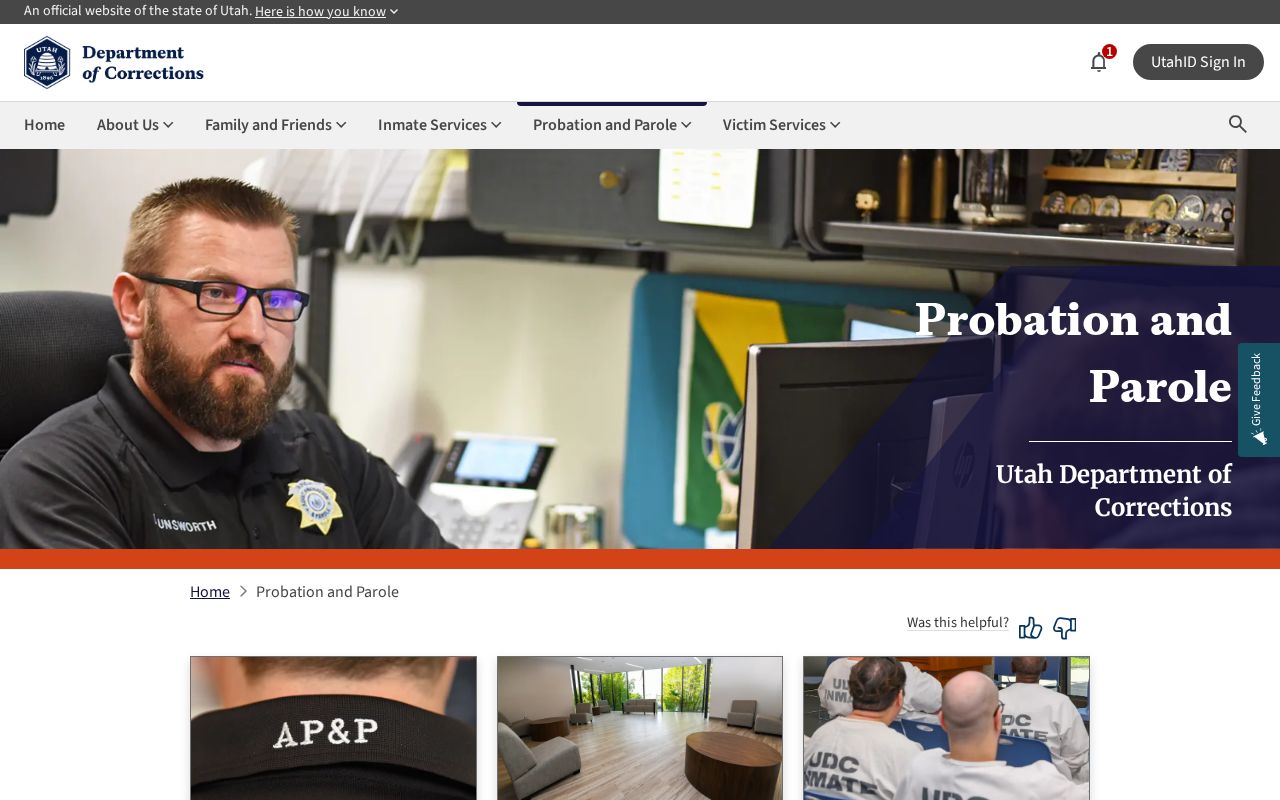
This contact route is distinct from Cache County Sheriff Records. Sheriff staff can document a county jail departure. AP&P can address present UDC community supervision.
Cache County Parole Hearings
The Board hearing and decision search supplies the state-prison parole record. Search by first and last name, known alias, or UDC offender number. A date-range search can find upcoming hearings and older published decisions. Enable pop-ups if an order does not open. Board records help is available at 801-261-6464.
A tentative hearing month is not a Cache County parole date. Scheduling begins only weeks before the event and can occur after the initial month. The Board may issue its decision later, often within two to six weeks. An original hearing can lead to a future rehearing, a parole date with conditions, paper review, or continued incarceration. Even an ordered future date may be rescinded because of conduct, a new conviction, or an unmet contingency.
The official Board search shows both scheduled events and published orders:
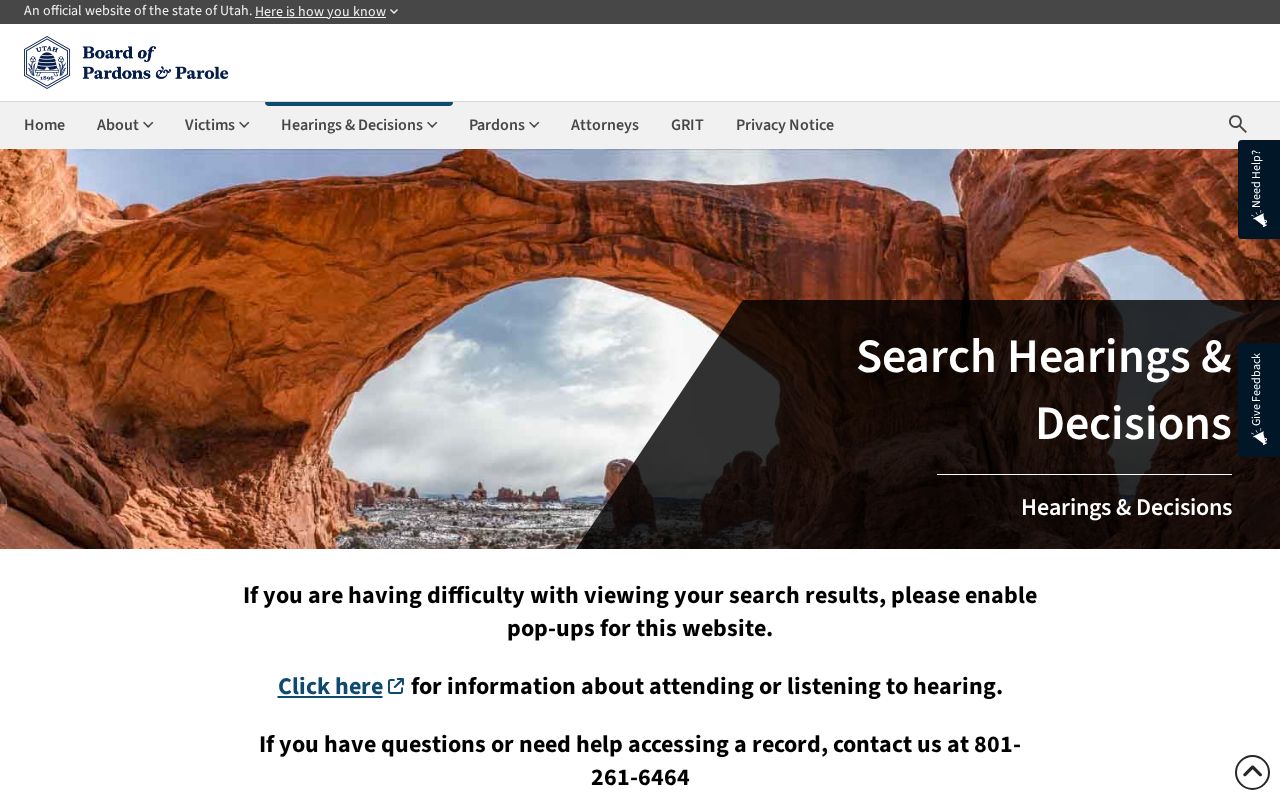
Read the order, then check the UDC Location field on or after the date. A hearing event alone never proves physical release or current Cache County parole status.
Cache County Supervision Warrants
An absconder is a person AP&P alleges has left supervision or stopped required contact. UDC states that AP&P may seek a warrant and that fugitive teams locate alleged absconders. No current official statewide public absconder directory was found. That gap matters: an old UDC status, a rumor, or a missed appointment is not a sound substitute for a current warrant record.
Use the Utah statewide warrant search promoted by Cache County when a warrant check is relevant. A warrant result is not a full parole history. It also does not show that the person is now confined. Confirm custody with the agency named in the warrant or the correct jail. A violation may lead to arrest, a return to prison, and a Board parole-violation or evidentiary hearing. The Board can reinstate parole, order more process, or issue a new decision.
Note: A prior parole release date does not prove uninterrupted community status after an alleged violation or new hold.
Cache County Supervision Discharge
Parole ends through formal termination or expiration. Probation ends under the court’s order, which may require a discharge entry or run to an expiration date. Moving away, finishing a program, or disappearing from the public UDC search is not the same as a legal discharge. The durable proof is the agency record that ends the status.
For parole, read the Board decision and request UDC’s actual termination or expiration record if needed. For probation, locate the sentencing case and the later discharge or completion entry. Utah Courts Xchange can help identify the judgment, probation order, warrant, and later outcome. Court entries explain the legal status but do not prove the exact time someone walked out of Cache County Jail.
Utah’s Government Records Access and Management Act, or GRAMA, governs UDC record requests. Classification and redaction rules still apply. A focused request should give the full name, offender number if known, date of birth, Cache County case number, and the exact termination, expiration, or Board order sought.
Cache County Reentry Programs
Cache County Jail lists Alcoholics Anonymous, Addiction Recovery/Heart to Heart, high-school instruction, InsideOut Dad, and parenting activities. InsideOut Dad includes ways fathers can prepare for release. These programs are a local part of the transition landscape, but attendance is not release proof and does not establish parole or probation. A person may join while still held, may transfer to another custodian, or may leave without AP&P supervision.
Program questions belong with the Cache County Jail or the named program contact. Supervision questions belong with Logan AP&P, the Board, or the sentencing court. Keeping those records apart avoids a common error: treating preparation for release as proof that release occurred. It also prevents a program list from being read as a set of formal supervision conditions.
Property After Cache County Release
Cache County publishes a few narrow release-property facts. Remaining inmate-account funds leave with the person on a debit card. Mail is not forwarded, and mail addressed to a former inmate is returned. Books sent to a person become jail-library property after release or transfer. These points apply to Cache County Jail practices, not to the terms of parole or probation.
The jail does not publish a general personal-property return rule, replacement identification process, or correction procedure for property records. Contact Jail Administration at 435-755-1000 rather than importing a policy from another county. If an agency record has an error, direct the correction request to the agency that created it. Logan AP&P cannot revise a Sheriff property record, while jail staff cannot alter a Board parole order.
Note: Questions about a debit card or returned mail do not establish whether Cache County supervision remains active.